Horiba Pentra XLR LIS Integration for Hematology Labs
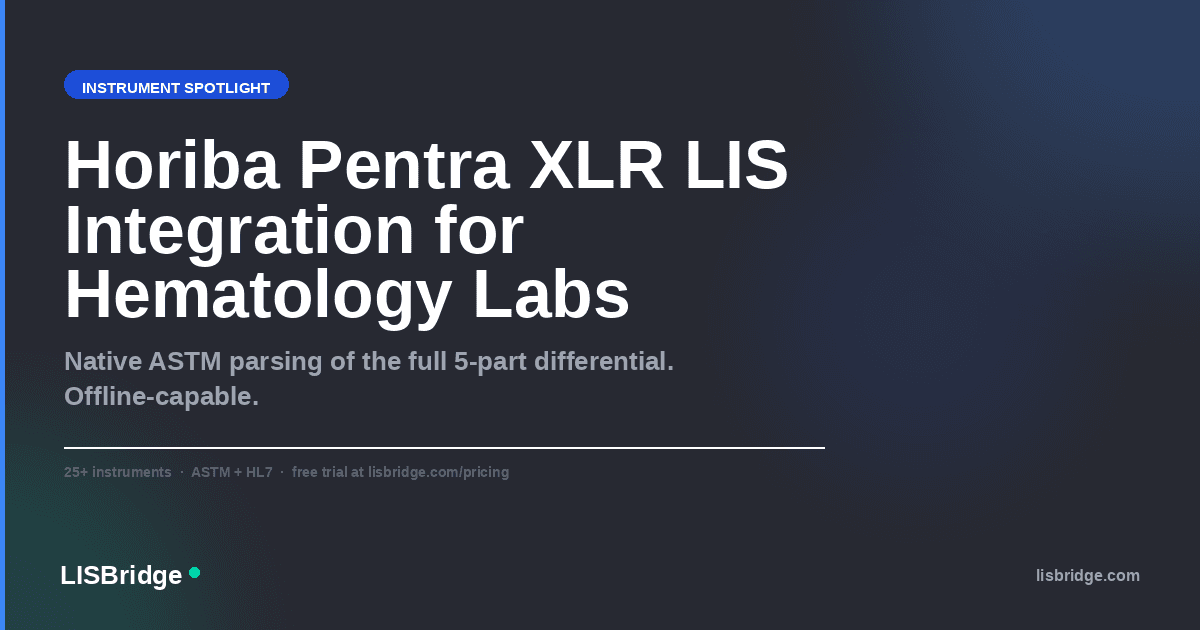
Horiba Pentra XLR LIS interface with LISBridge. Native ASTM parsing over RS-232 or TCP/IP, offline-capable, and live in under 10 minutes — no custom build.
Horiba Pentra XLR LIS Integration for Hematology Labs
The Horiba Pentra XLR is a 5-part differential hematology analyzer built for mid-to-high-volume labs that want a full CBC with differential, reticulocytes, and a deep set of research parameters. It is a fixture in European hospital and clinic labs in particular, where Horiba has a long install base. And like every analyzer of its class, it produces a stream of structured result data that has to reach the LIS somehow. Too often, "somehow" means a technologist reading a screen and typing.
This post explains how LISBridge gives the Pentra XLR a clean LIS interface, what it does with the analyzer's output, and how quickly a lab can stop transcribing.
What the Pentra XLR Is and Where It Runs
The Pentra XLR reports a complete blood count with a 5-part white-cell differential plus extended parameters—the kind of detailed output that high-throughput hematology labs rely on for screening and flagging. It is most common in:
- European hospital and clinic labs with established Horiba fleets
- Markets where Horiba has strong distribution and service coverage
- Labs running the Pentra XLR next to chemistry and immunoassay instruments from other manufacturers
That mixed fleet is the usual integration headache: every analyzer speaks its own protocol, and the LIS wants one clean input stream. The Pentra XLR communicates over serial and supports the ASTM E1394 record structure used across clinical analyzers. ASTM is a stable, well-documented bidirectional standard, which means a tool that parses it correctly can read the Pentra XLR without touching the instrument's firmware. The work is on the middleware side: translate the analyzer's ASTM into structured records the LIS can accept.
The Problem Labs Run Into Without Middleware
A Pentra XLR without middleware tends to land in one of three situations:
- Hand transcription—slow, and exposed to error
- A custom interface—costly, and brittle when anything changes
- A siloed analyzer—its rich differential data never feeding the lab's wider reporting
Manual entry is the most common and the most dangerous. An AHRQ-cited audit of transcribed lab data found roughly a 10% error rate, most of it from transcription—a known patient-safety vulnerability. A 5-part differential has more fields than a basic count, so each retyped Pentra XLR result carries more opportunities to introduce a mistake. The automated alternative isn't a luxury; it's the recognized fix.
What LISBridge Does Specifically With the Pentra XLR
LISBridge is a native desktop application that bridges the analyzer to your LIS through four real-time steps: connect, parse, process, deliver.
- Connect: to the Pentra XLR over RS-232 serial or TCP/IP, running both connection types at once when your lab mixes them
- Parse: the Pentra XLR's ASTM E1394 output natively, pulling the full CBC, the 5-part differential, and extended parameters into structured fields—no hand-built mapping required
- Process: validating, structuring, and deduplicating the data
- Deliver: clean results into your LIS, or a standalone report if the Pentra XLR runs outside a full HIS
Two capabilities matter especially for a European lab. First, LISBridge runs offline with local, device-based licensing—the analyzer-to-LIS path doesn't depend on internet uptime, which reframes connectivity as continuity of care rather than a feature. Second, parser updates ship as WASM modules that hot-swap silently in the background—no restart, no downtime, no IT ticket—so keeping the Pentra XLR profile current never interrupts a run. See the data parsing pipeline for detail.
How Fast It Connects
Bringing the Pentra XLR online is a configuration step, not a project. You select the instrument profile, point LISBridge at the serial port or network address, and confirm the LIS destination—results parse in under 10 minutes. No firmware change, no custom code to maintain later.
A hospital that connected five analyzers through LISBridge eliminated about 2 hours of manual transcription per day and raised accuracy past 99.9%. A 5-part analyzer like the Pentra XLR, with more fields per result, contributes more to that saving than a basic counter does. LISBridge supports the Pentra XLR alongside the rest of the Horiba line and 24 instruments out of the box, so a lab that grows its fleet keeps one tool, not several. More on our laboratory integration overview.
FAQ
Does it capture the full 5-part differential?
Yes. LISBridge parses the complete CBC, the differential, and extended parameters from the analyzer's ASTM E1394 output.
Serial or network?
Both. Many Pentra XLR installs use RS-232; LISBridge also handles TCP/IP and runs both at once.
Which LIS is supported?
Any LIS that accepts structured result input. LISBridge delivers clean, parsed data to the destination you configure.
Does it work offline?
Yes—it's a local desktop app with offline licensing, so results keep flowing during an outage.
Connect Your Horiba Pentra XLR Today
The Pentra XLR already does the hard analytical work. Getting its results into the LIS should be the easy part.
Start your free trial — no credit card required. lisbridge.com/pricing
Comments (0)
No comments yet. Be the first to leave one!